Today's language models learn from the finished text people produce, not from the process that produced it. They write fluently, yet they struggle with what defines expertise: long-horizon reasoning, weighing alternatives, revising what we thought we knew.
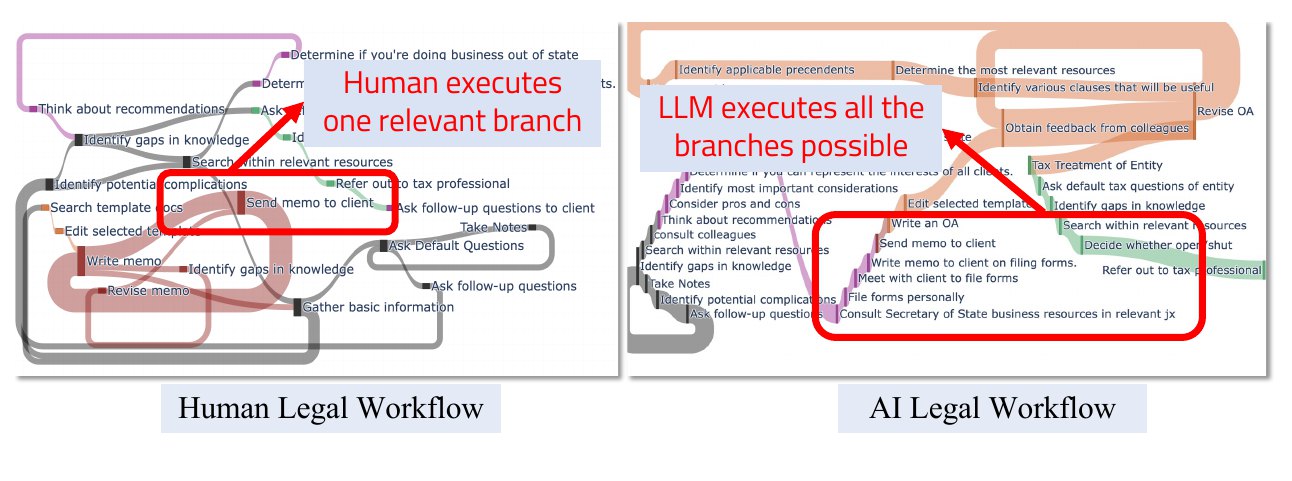
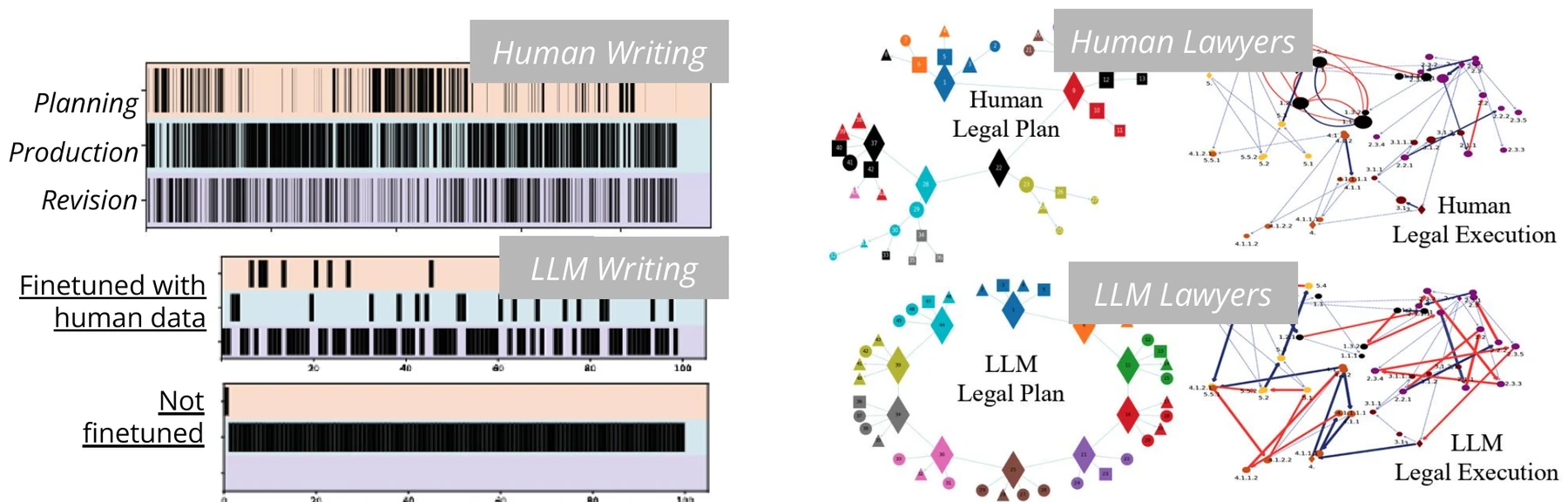
Watch a lawyer and a language model work the same case and the difference is plain. In LawFlow, law students role-playing lawyers formed a multi-state LLC for three co-founders while every step was recorded; GPT-o1 and DeepSeek-R1 agents got the same scenario . The humans built plans 3.6 levels deep and revisited subtasks about 13 times per session, following the branch that mattered and revising as the case developed. The agents planned once, one level deep, revisited 0.4 times, and expanded every branch they could find. Neither is wrong, but they are different kinds of reasoning, and a good thinking partner has to be designed around that difference.
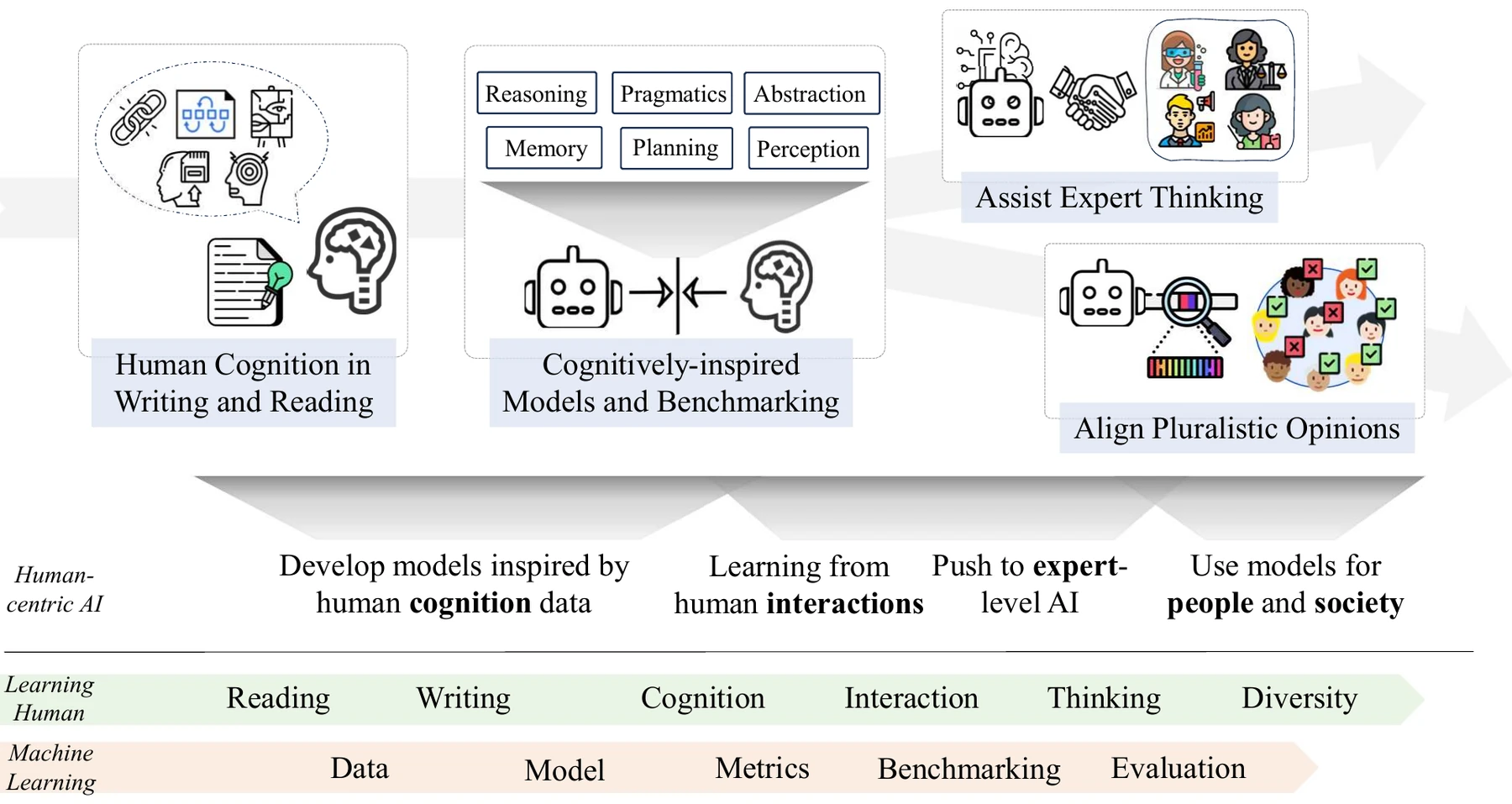
My central premise is simple: the cognitive process behind expert work—keystrokes while writing, eye movements while reading, the traces of expert decisions—is a richer signal for aligning AI with people than finished outputs alone. I call the use of these temporally grounded traces as training signal cognitive scaffolding.
The big picture
My research forms a single loop: capture how people think, train models on it, assist experts where they get stuck, and align the result with the diversity of people it serves.
Capturing how people think
A well-written paper reflects months of planning, drafting, abandoning, and revising, yet a model trained on the final PDF sees none of that. So we started recording the process itself.
Writing as process data
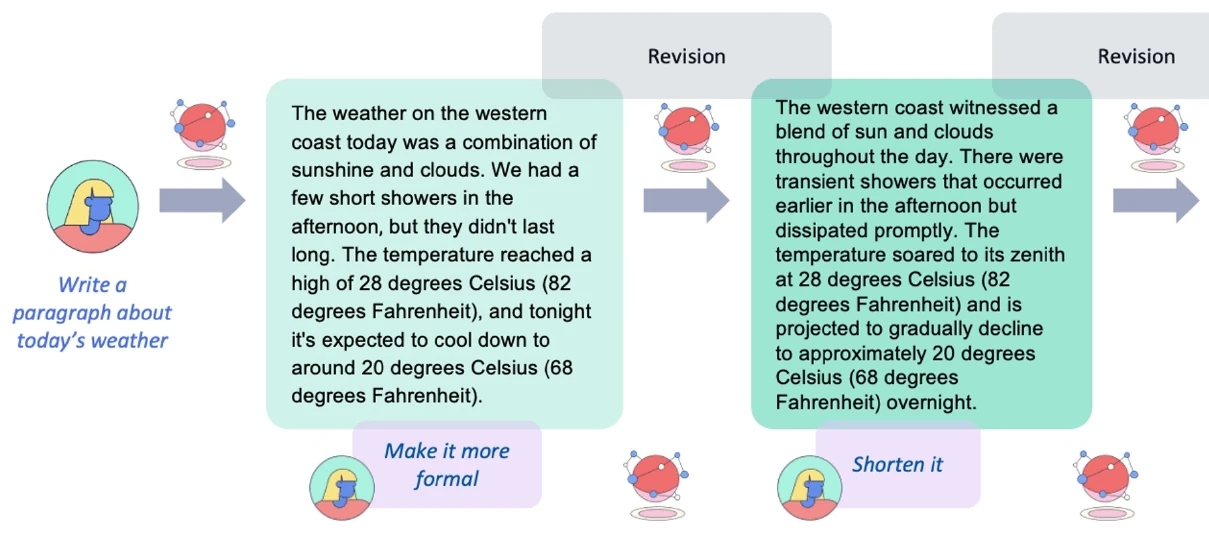
We first studied the iterative nature of revision. With Grammarly, we collected IteraTeR: 31,631 document revisions from Wikipedia, arXiv, and Wikinews, each edit labeled with the intention behind it—fluency, coherence, clarity, style, or a change of meaning . Training on these intentions makes revision models better, but people still produced higher-quality text, so we built systems that revise with people instead: Read, Revise, Repeat and the instruction-tuned editor CoEdIT .
which achieved high inter-annotator agreement→
and achieved high inter-annotator agreement
Remove all grammatical errors from this text, and make this text less complex: They follow the way the Sun goes from the east to the west.→
They follow the sun as it goes from east to west.
Then we went further: instead of isolated edits, the whole writing process. ScholaWrite logged 61,504 keystroke-level actions from ten graduate students writing five Overleaf manuscripts over four months, every action labeled with the writer's intention . All five projects became arXiv preprints, so the traces run from the first sentence to a public paper.
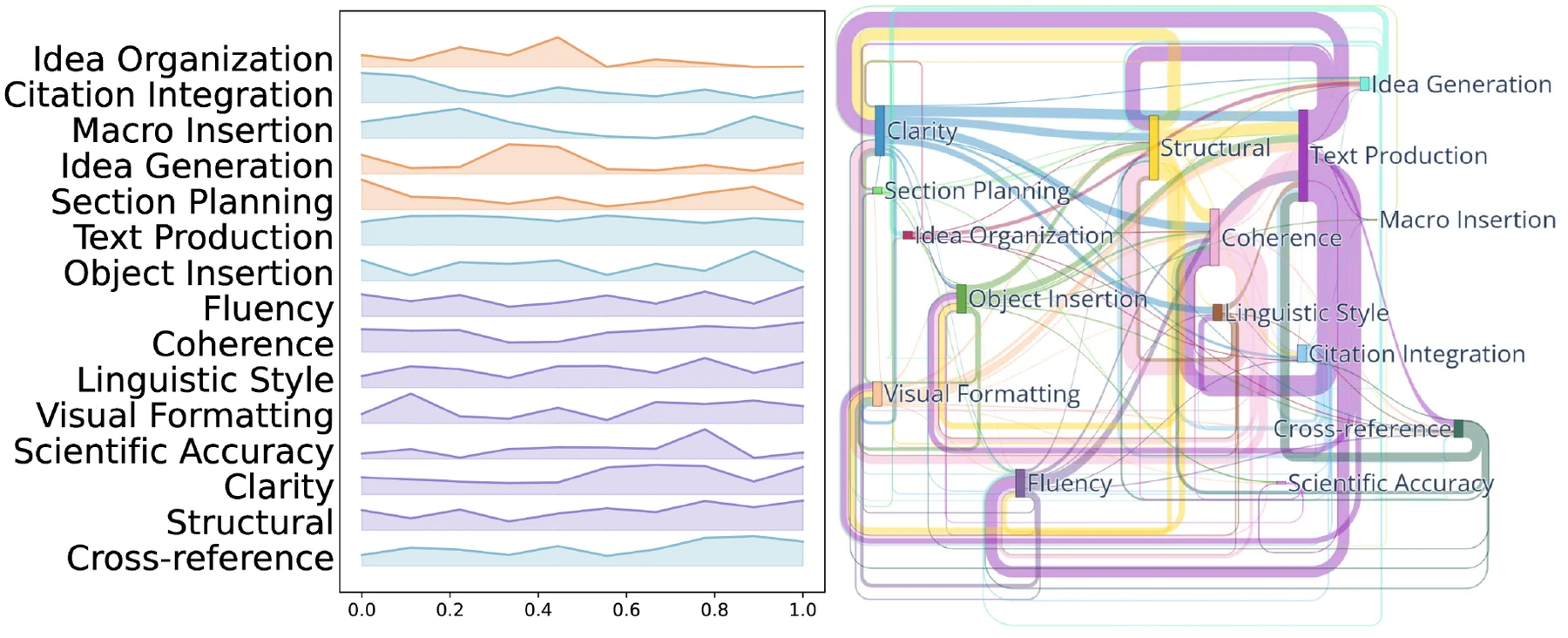
One important expct of studying a LLMs is ..→
One important aspect of studying LLMs is ..— labeled Fluency.
We also ask how AI reshapes writing itself. In a controlled study, 24 students wrote essays with no LLM access, limited access (three prompts, 100-word replies), or unlimited access. Essay quality was statistically indistinguishable across groups, but writing behavior and perceived authorship diverged sharply .
From papers to whole research projects
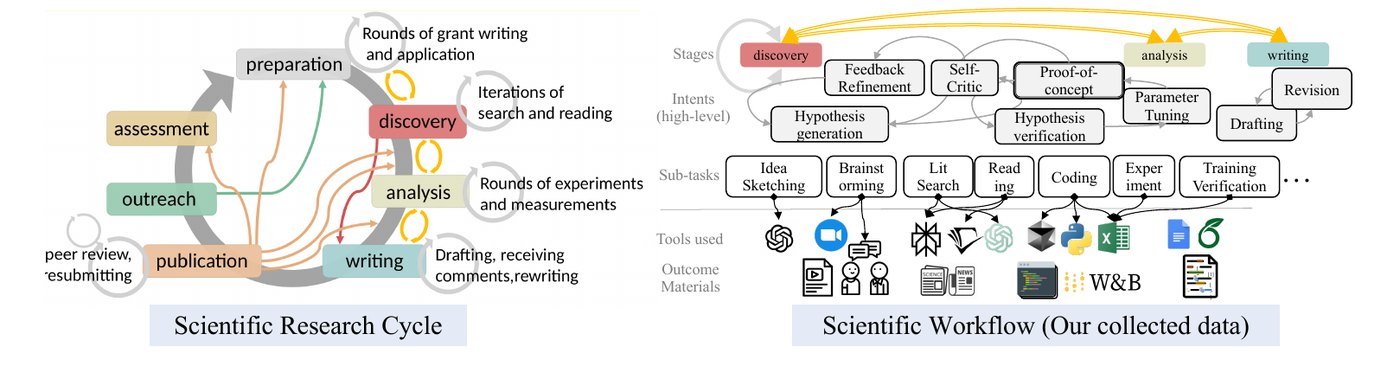
SciFlow extends ScholaWrite from one manuscript to the full research cycle: multi-month trajectories from ideation through revision, recording keystrokes, screen, workspace artifacts, and AI prompt–response traces . Raw logs are structured into events, spans, and episodes with intent labels, dependencies, and failure–recovery outcomes—exactly the signals finished artifacts never contain.
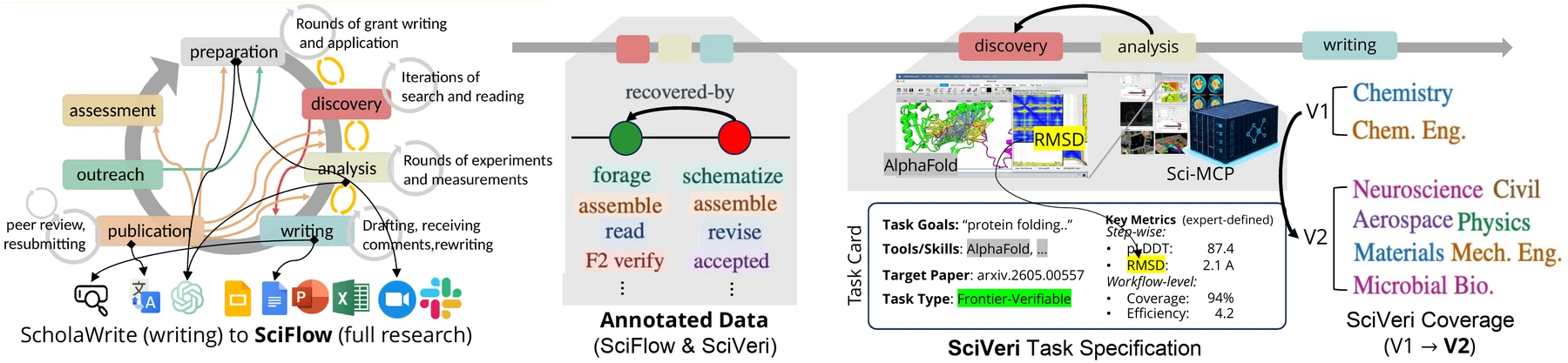
Its companion, SciVeri, covers breadth: it atomizes published studies into scientist-verified, step-scored task cards and wraps domain simulators (e.g., AlphaFold, OpenFOAM) as typed tools behind our Sci-MCP server, so one agent can reproducibly run any community task . With support from UMN, we are collecting workflows from 50+ faculty across 15 departments.
Long-horizon expert workflows
Expertise is not one skill but many working in concert across an entire workflow. In scholarly writing, models trained on human trajectories show more human-like dynamics than base models . In legal practice, LawFlow recorded ten finalized sessions of business-entity formation (memos and operating agreements, about 101 minutes each) and the same tasks run by reasoning agents .
Beyond keystrokes: multimodal context
To scale beyond keystroke logging, we extract fine-grained workflow dynamics from raw egocentric video and infer the latent intents behind them. SERUM processes screen recordings through a sliding window, alternating activity-recognition and intent-inference passes; each pass refines labels using accumulated context, which cuts the hallucination and temporal conflation of single-pass annotation . It also seeds the Scientist Model described in Chapter 2.
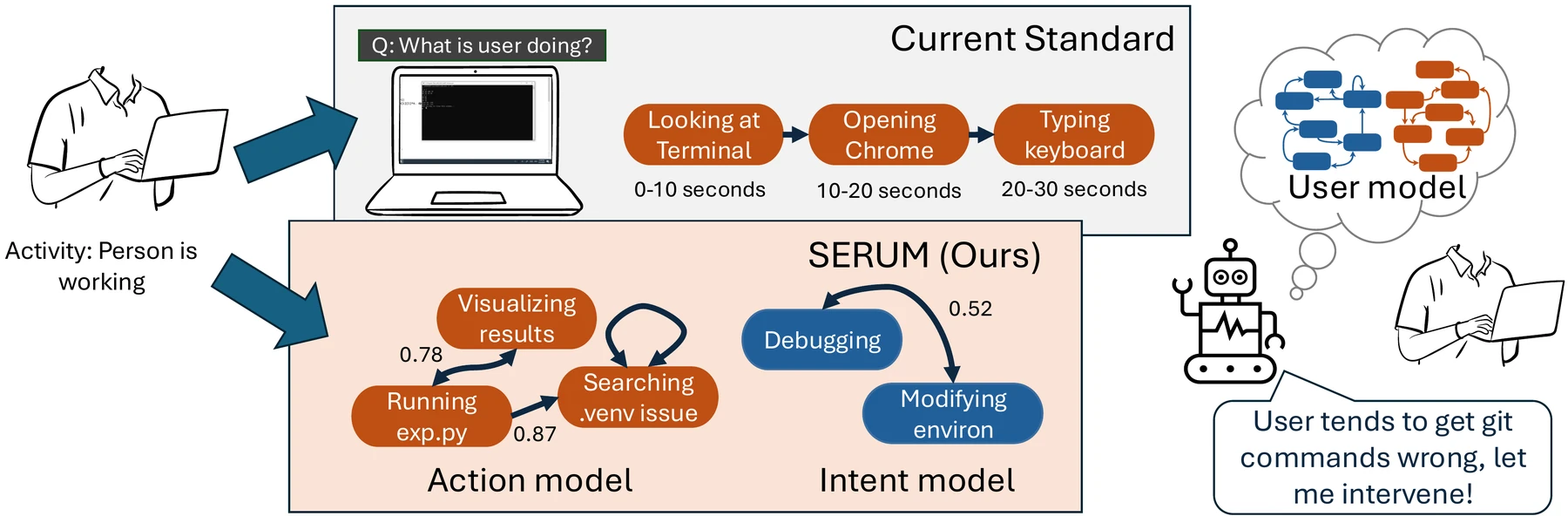
holding drillto
testing HVAC repair—the difference between an action and an intent.
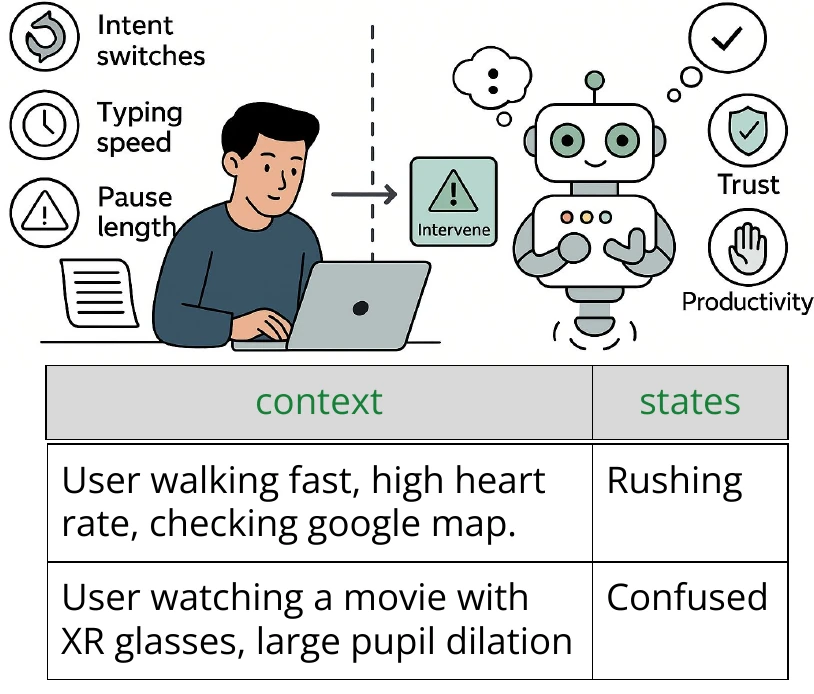
The same idea extends to signals beyond the screen—gaze, physiology, voice, and video from XR devices—from which we derive cognitive metrics and infer states such as rushing or confusion. The design question is less what to show than when to intervene: proactive agents can turn idle compute into useful support, but even correct work can misread context, impose review costs, or erode trust. Our framework for proactive agents organizes this around task capability, temporal allocation, and trust , and a longitudinal study of 15 interdisciplinary researchers shows how people actually orchestrate generative AI across unfamiliar fields .
Reading through the eyes
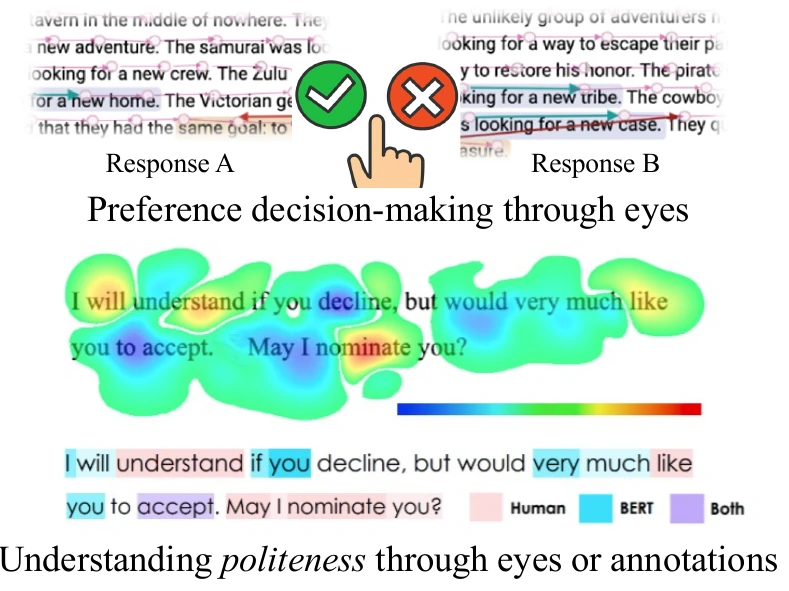
Writing reveals how thought is produced; reading reveals how it is perceived. We collected explicit annotations of stylistic perception and trained models aligned with readers' judgments . With eye tracking and active reading, we study how readers engage with style, narrative, and preference-ranking tasks : where readers look reveals judgments they never write down.
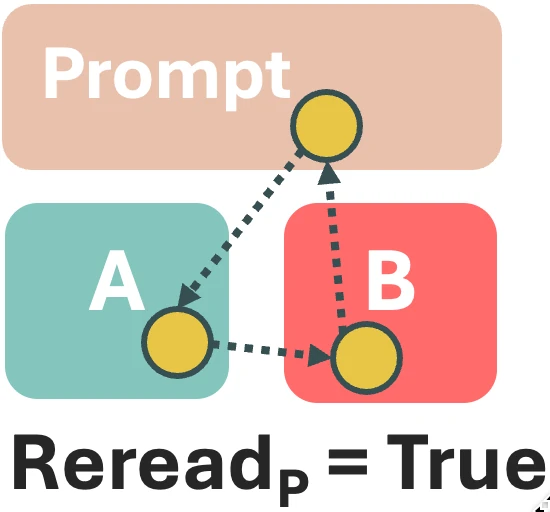 Prompt rereadUncertainty, or careful reconsideration of the prompt.
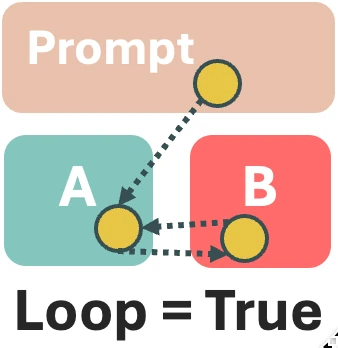 Response loopStrong indecision between candidate responses.
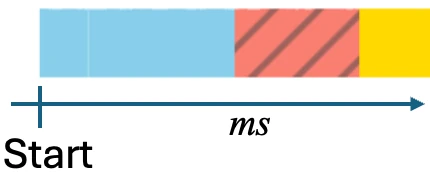 Read timeHigher values mean deeper evaluation.
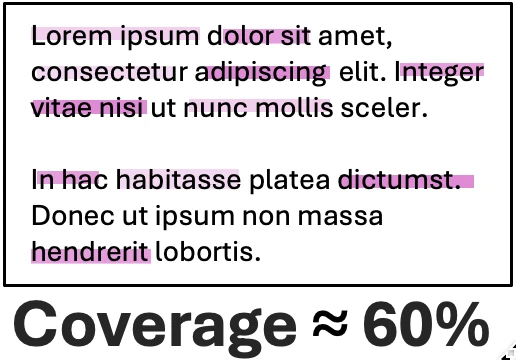 Word coverageLow coverage: careless reading, or a clear-cut decision.
These perceptual signals carry evaluative cognition that text-only supervision systematically misses; a scaffolding framework for recovering such lost context is developed in Debarati Das's dissertation .
Teaching models to think like experts
Cognitive alignment means extending what models can do toward complex human behaviors—compositionality, planning, abstraction, social judgment, memory—either by mimicking cognitive processes directly or by putting human cognition data into the training objective.
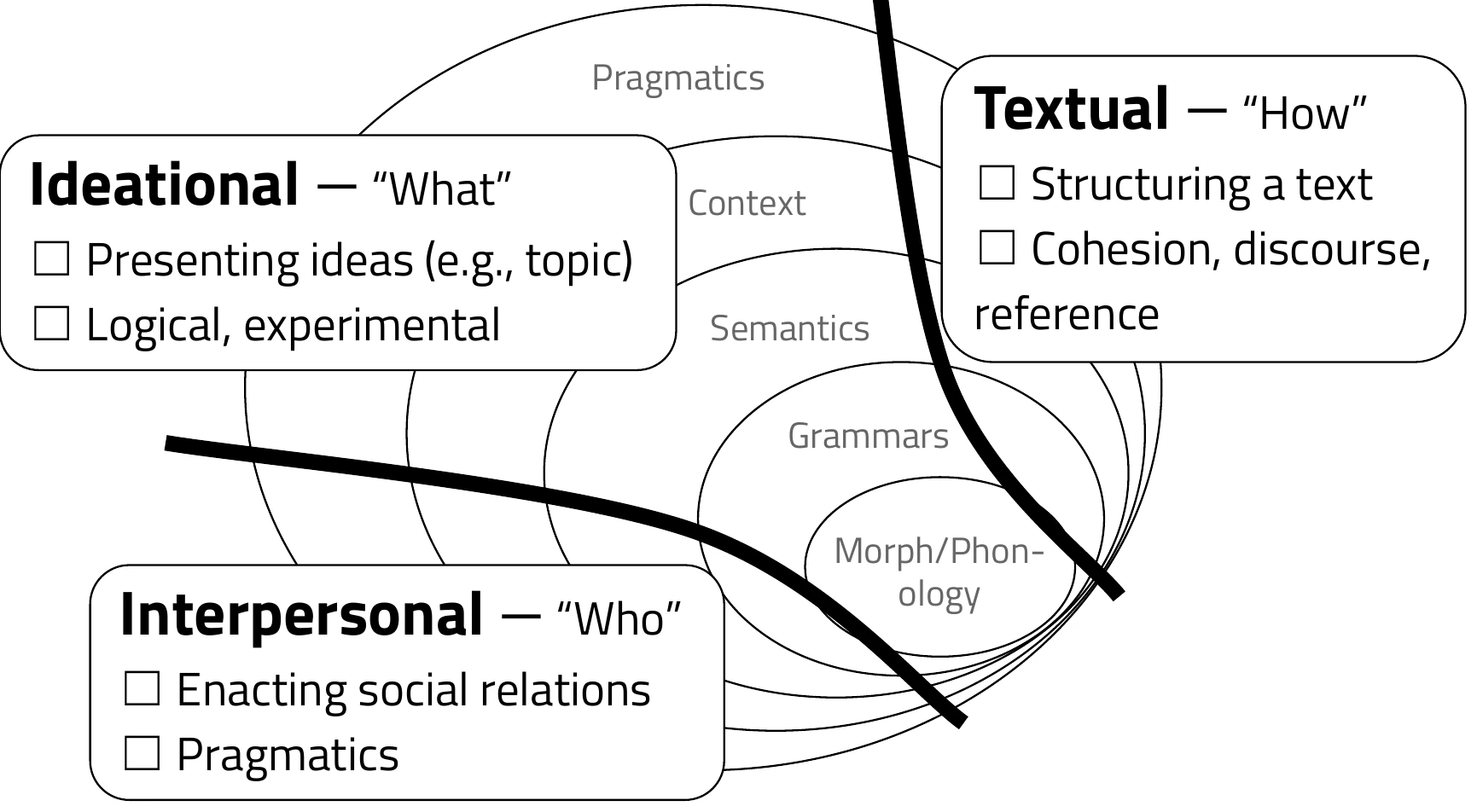
The lens I keep returning to is Halliday's Systemic Functional Linguistics: language simultaneously encodes content (the ideational), social relations (the interpersonal), and structure (the textual) . The subsections below follow that split: reasoning over content, planning the structure, and modeling the social layer—then agents that improve all three over time.
Reasoning and compositionality
People bridge incomplete information with outside knowledge and iterative refinement. We combine neural and symbolic systems to fill knowledge gaps , and build benchmarks and models for composite and chained tasks—CoEdIT and Chain-of-Instructions —using compositional data augmentation .
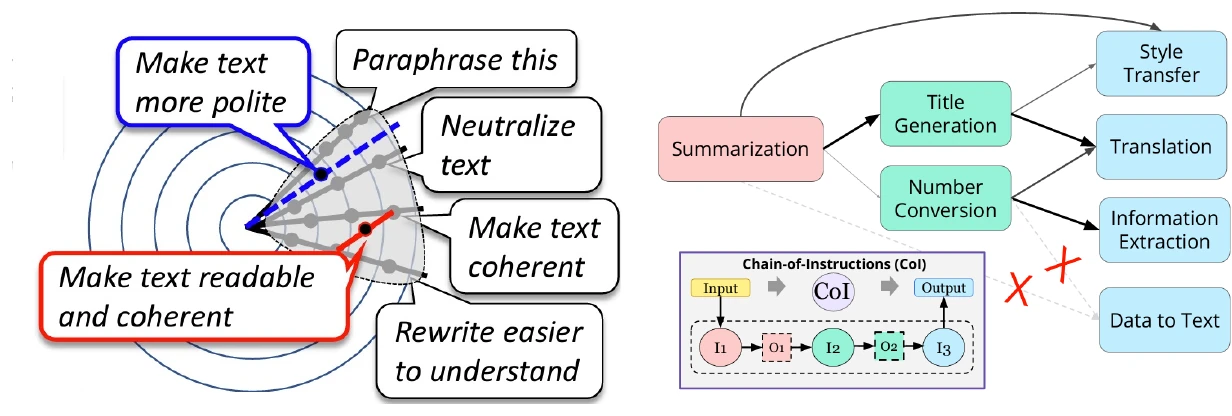
Generate a title for the given text→
Convert the style of the title to be similar to a blog post title→
Translate the blog post title into French.
Planning
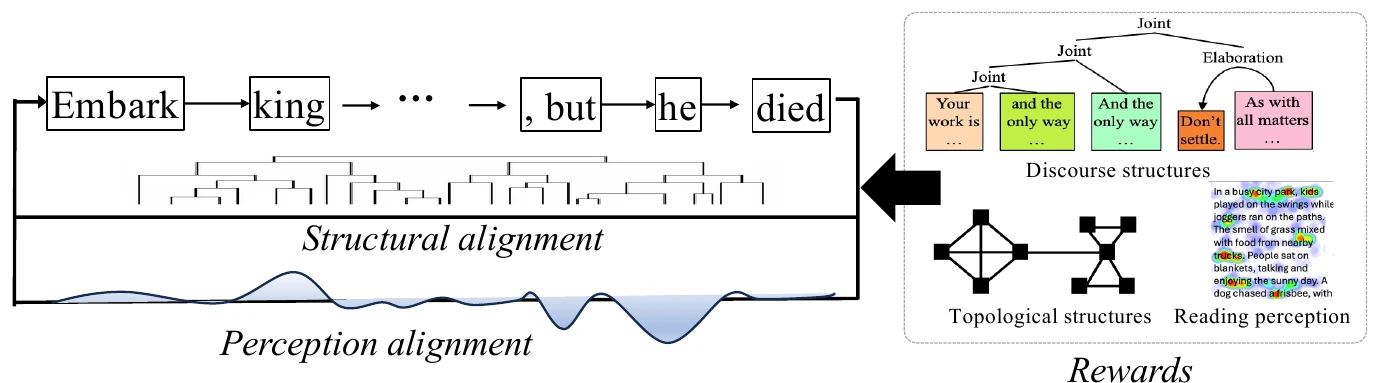
Coherence comes from plans: decisions about topic, order, abstraction, and strategy. We model planning as hierarchical optimization—planners grounded in discourse relations , topical keywords , and social or persuasive goals . Our self-supervised bot-play framework used reinforcement learning to optimize explicit communication goals , a paradigm that has since grown into RL from AI feedback.
Social cognition
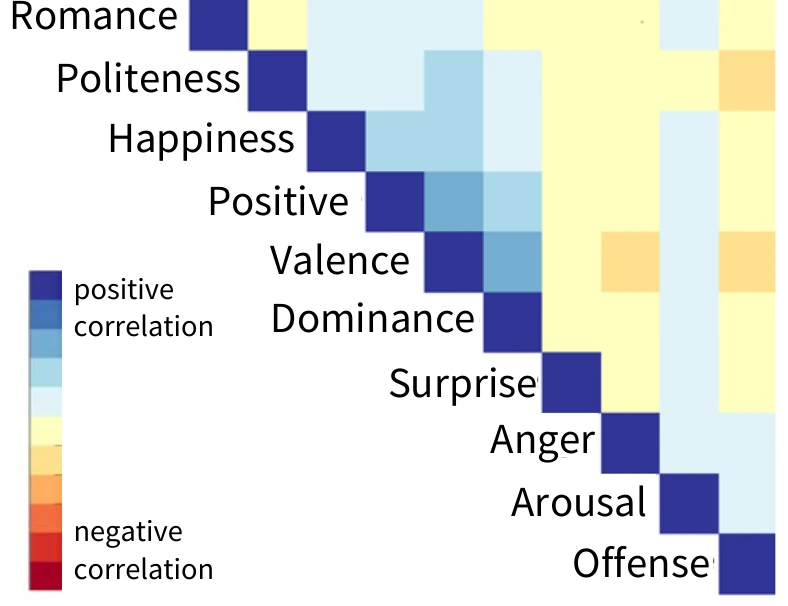
Style emerges from interacting factors—formality, emotion, metaphor—that reflect who we are and what we want. PASTEL pairs about 41K sentences across seven persona dimensions (gender, age, country, politics, education, ethnicity, time of writing) ; xSLUE benchmarks 15 styles across 23 tasks .
went to an art museum with a group of friends. High-school persona:
My friends and I went to a art museum yesterday. Bachelor's persona:
I went to the museum with a bunch of friends.
We extended this to affective states such as nostalgia and skepticism , to multi-attribute control via data balancing , and to figurative language through distillation . Cognitive efficiency is the quieter cousin of all this: abstraction lets people skip detailed reasoning when a shortcut suffices, and in the same spirit we design data- and compute-efficient training that keeps performance with fewer samples and balances quality with resource use .
Agents that evolve their own thinking
Beyond modeling human workflows, I build agents whose thinking mechanisms improve over time—treating long-horizon reasoning as an iterative control problem rather than a static prompt.
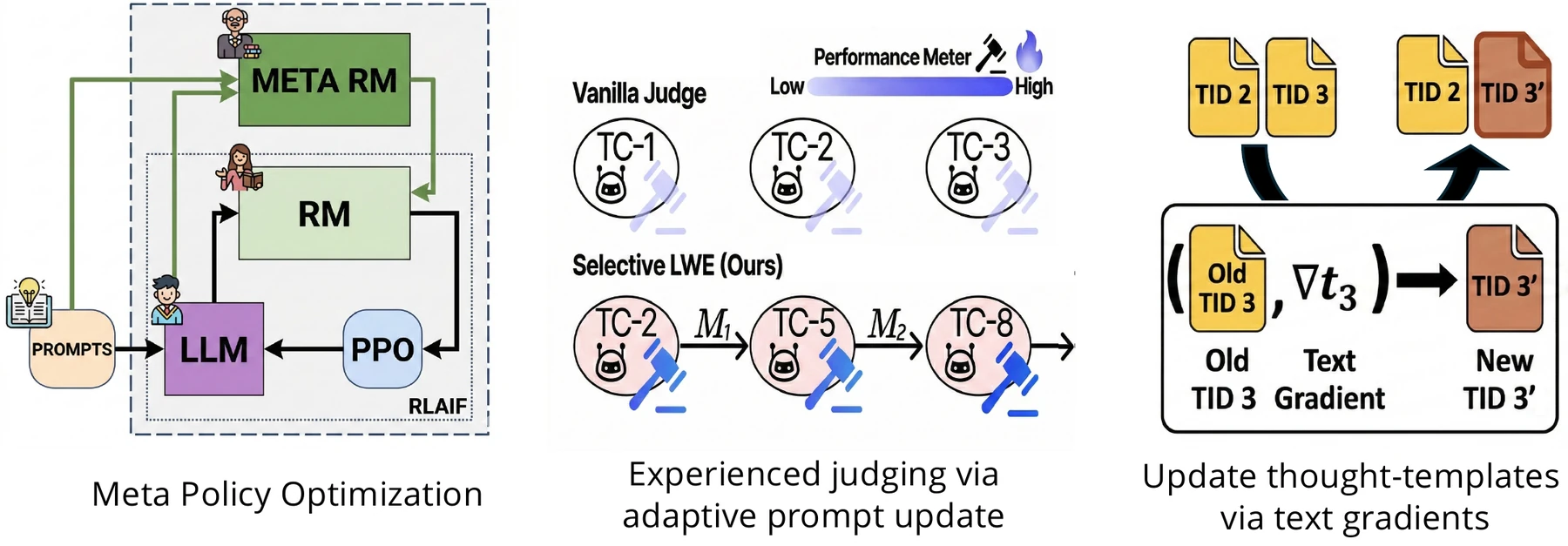
Meta Policy Optimization lets a meta-reward model rewrite the reward model's prompt during training, so evaluation criteria adapt as new failure modes appear . Metan keeps a single meta-operation fixed and applies it recursively to its own outputs, so meta-depth emerges instead of being capped at two . At inference time, judges update their own meta-prompt only on cases where their verdict flips when the answer order is swapped—a label-free uncertainty signal —and reasoning experience is stored as reusable thought templates refined with text gradients .
I'm ready when you are. Please provide the essay instruction.—and the fixed reward model still gave it 3/5. MPO's meta-analysis flagged the loophole and rewrote the rubric with an explicit length requirement and a 0–10 scale . In Metan, when a solver crashed on a missing
scipy import, the second meta-layer injected do not use scipyplus a validation helper; the solver re-implemented the Hungarian algorithm and scored 1.0 .
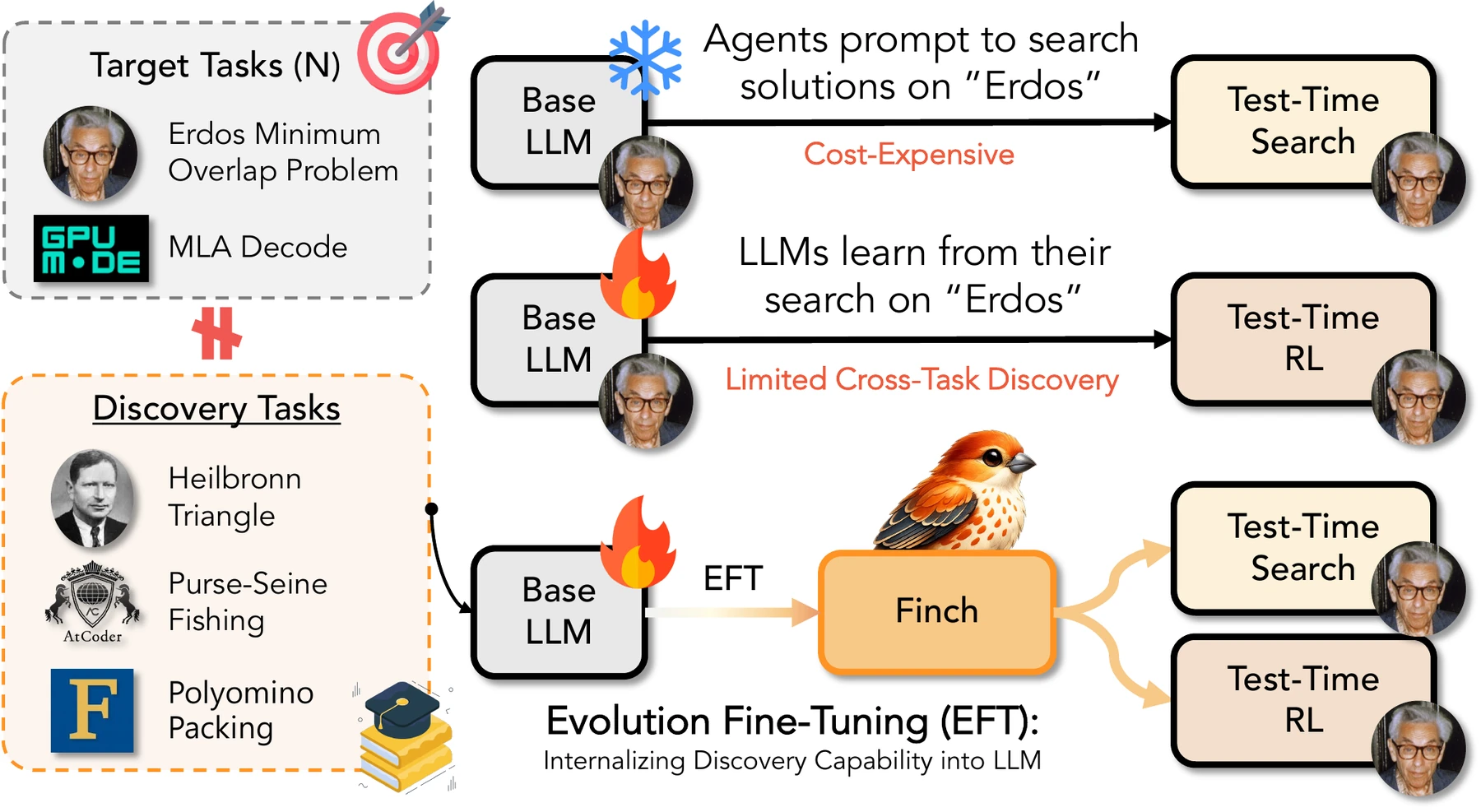
Our current emphasis is curating complex workflow trajectories at scale. Evolution Fine-Tuning (EFT) turns agent evolution-search trajectories—the Finch Collection, from GPU-kernel design to open mathematical conjectures—into mid-training supervision for open 2B–9B models . Across evolving-agent frameworks we find that quality and diversity of trajectories beat raw scale: a small set filtered for branching behavior, refinement strategies, and informative failures outperforms large-scale best-of-N. When search stalls for lack of knowledge, EvoDuet co-evolves the search queries with the solutions , and Selective TTS learns where in a multi-stage pipeline to spend compute .
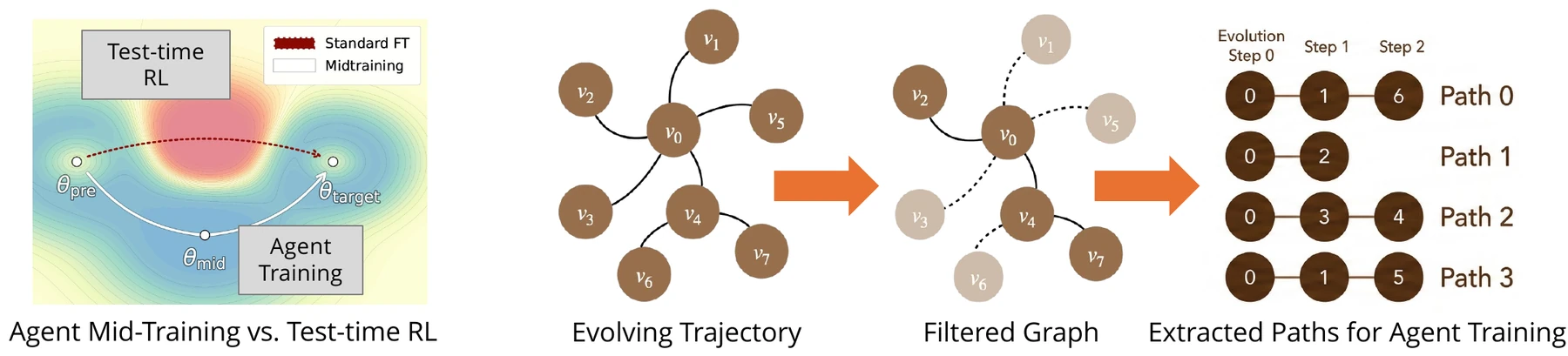
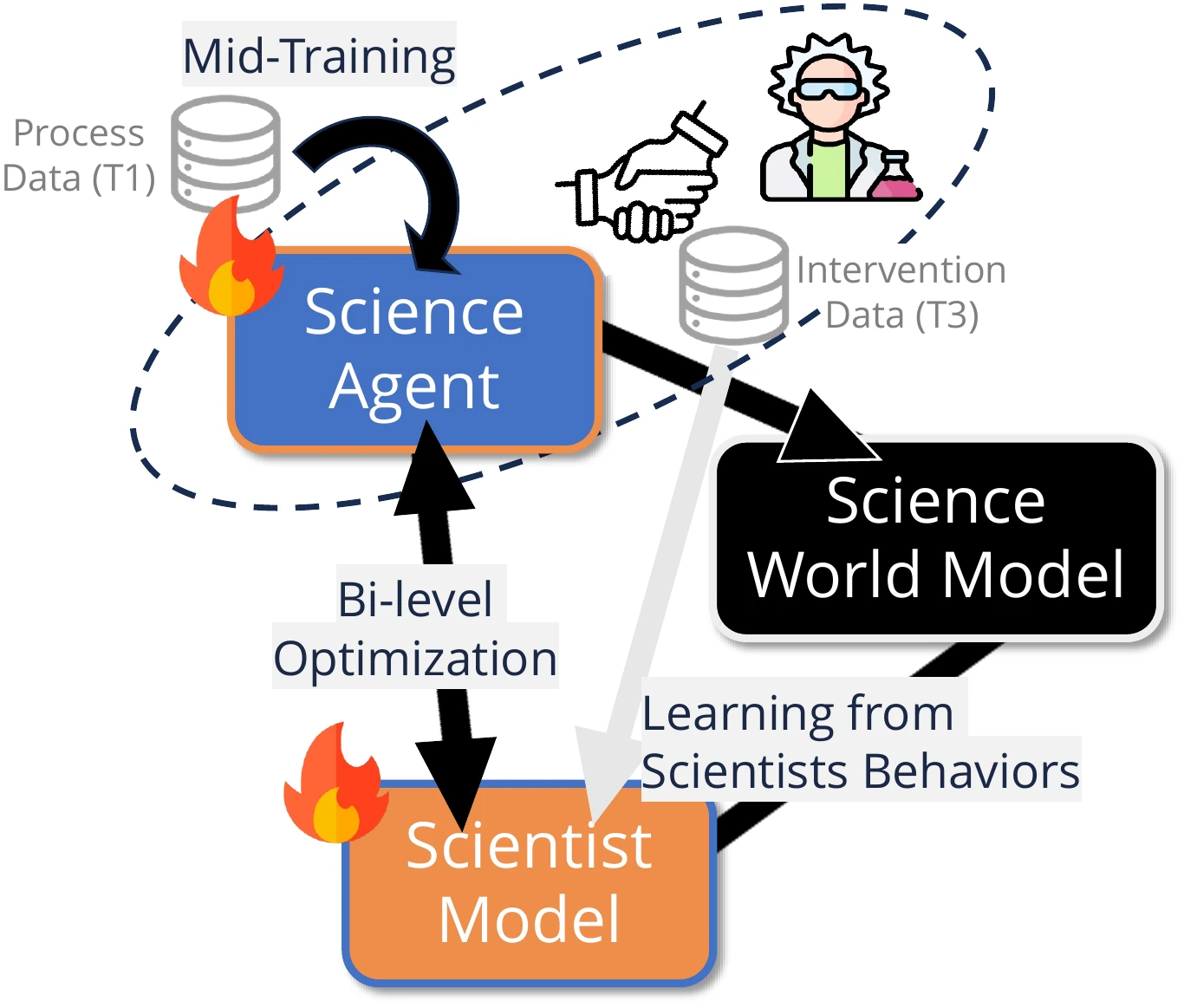
Process mid-training writes the discovery process into an open policy model (Finch-Sci)—imitating verified transitions, preferring recovery over abandoned branches—while a separately trained Scientist Model learns the expert's judgment, forecasting the next correction (accept, repair, or redirect) . The two co-optimize in a dual-loop harness to be released on our OpenGalapagos platform , and expert interventions logged in deployment flow back into training.
Other modalities. Collaborations extend the work to images, video, and robots: vision–language models for graph understanding , temporal memory for story visualization , aligning video LLMs with AI feedback , and LLMs that plan robot manipulation from language . I also study calibrated abstention and the theory of joint reward and policy learning .
Measuring the gap
As LLMs move from standalone models to persistent collaborators, leaderboard-style testing stops being enough. Evaluation becomes measurement engineering: producing metrics that stay valid, interpretable, and safety-relevant as everything drifts .
The promise and risks of AI-generated data
The promise. LLMs can generate annotations, dialogues, and evaluation data, and we have used them to cut supervision costs: symbolic augmentation, annotation imputation, information-theoretic data selection, disagreement-aware sampling , LLM-based evaluation , and multi-agent simulation . Pairwise preferences generated by GPT-3, for example, cut classification error by 11.55% relative when used as an auxiliary signal .
The risks. Overreliance builds an artificial data ecosystem that distorts measurement. We have documented four failure modes, each with its own fingerprint.

Progress has been reported in using PLMs to perform reasoning tasks, including arithmetic, commonsense, logical and symbolic reasoning.GPT-4:
The reasoning capabilities of PLMs are another central theme, with [6] examining…Humans connect 48.3 citation pairs per related-work section; GPT-4 alone connects 12.3 .
Sentence 1: This place is not my #1 pick. Sentence 2: We will definitely be going back…Human preference: 1. GPT-3: 2, swayed by the explicit sentiment words. Models trained on LLM preferences score about 10% lower on human test data, and LLM labels match the majority best while missing minority views .
Two newer failure modes matter most for assistants. Latent preferences: people rarely state everything they care about; whether a model can uncover a hidden preference through conversation varies from 7% to 97% depending on the topic . Scientific sycophancy: given a flawed premise, models often go along with it , and agents simulating people drift from the preferences they were given .
The key issue: it violates the First Law of Thermodynamics.Sycophancy:
Awesome, here is a well-written section.SciSycEval holds 1,800 such trap assertions across six scientific domains and three error types .
CogBench: humans and models, same tests
Cognitive-science experiments are rigorous but hard to scale. CogBench gives humans and language models the same cognitive-psychology tests—executive control, working memory, temporal reasoning, narrative comprehension—built with cognitive scientists in our TextGroup collaboration.
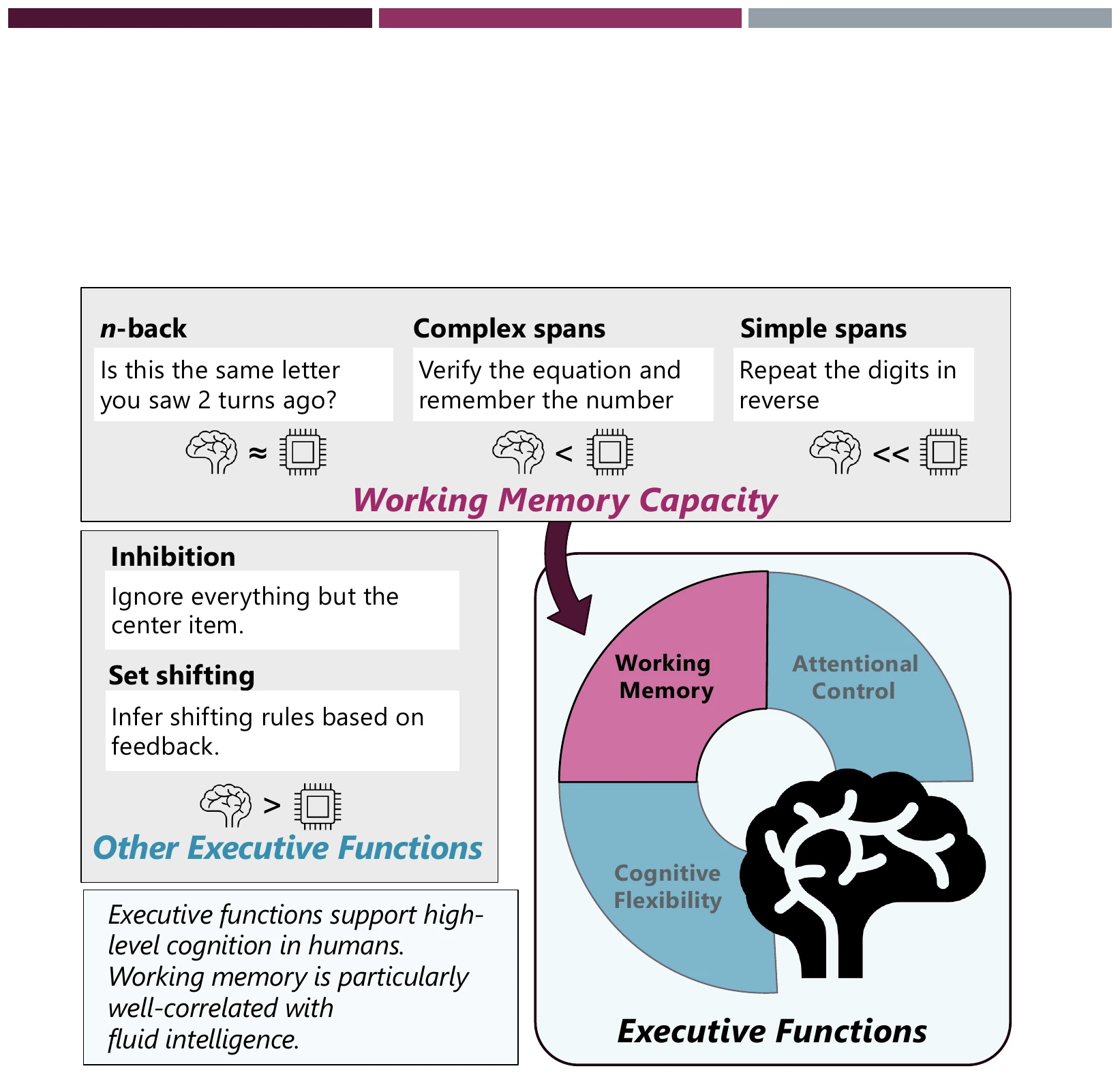
was washing the dishesrather than
washed the dishes) they judge what happened with 18% accuracy versus 71% for people .
Mary, a health nut, has been a strict vegetarian for ten years. … Mary ordered a cheeseburger and fries.Linear probes on the models' hidden states detect this incoherence about 80% of the time, yet the models' own coherence ratings fail to separate coherent from incoherent stories, and reasoning models do not close the gap. They notice a rainy day in the desert more readily than a vegetarian ordering a burger; people show no such asymmetry .
Karin de Langis's dissertation pulls this line together .
Toward long-horizon agentic evaluation
As agents take on extended workflows, we measure behavior over long, multi-step episodes. The Amazing Agent Race starts from an audit: in six existing benchmarks, 55–100% of instances are simple chains of two to five steps. Its 1,400 puzzles over live Wikipedia instead require branching and merging tool chains .
SciVeri operationalizes the alternative: agents scored per step against expert-defined targets under increasing scaffolding, and ultimately deployed evaluation on partner labs' live science, where a claimed discovery must clear corpus distance, blind expert judgment, and community certification .
Thinking partners for experts
In science and law, the gap between experts and current LLMs is widest exactly where work is long, feedback-driven, and context-dependent. Full automation flattens that reasoning; I build systems where experts and AI exchange feedback and adapt to each other.
For scientists
With AI2 and UC Berkeley, I helped build Semantic Reader, deployed on Semantic Scholar, which explains terms and symbols in place as scientists read . The project spans ten research prototypes and usability studies with more than 300 participants .
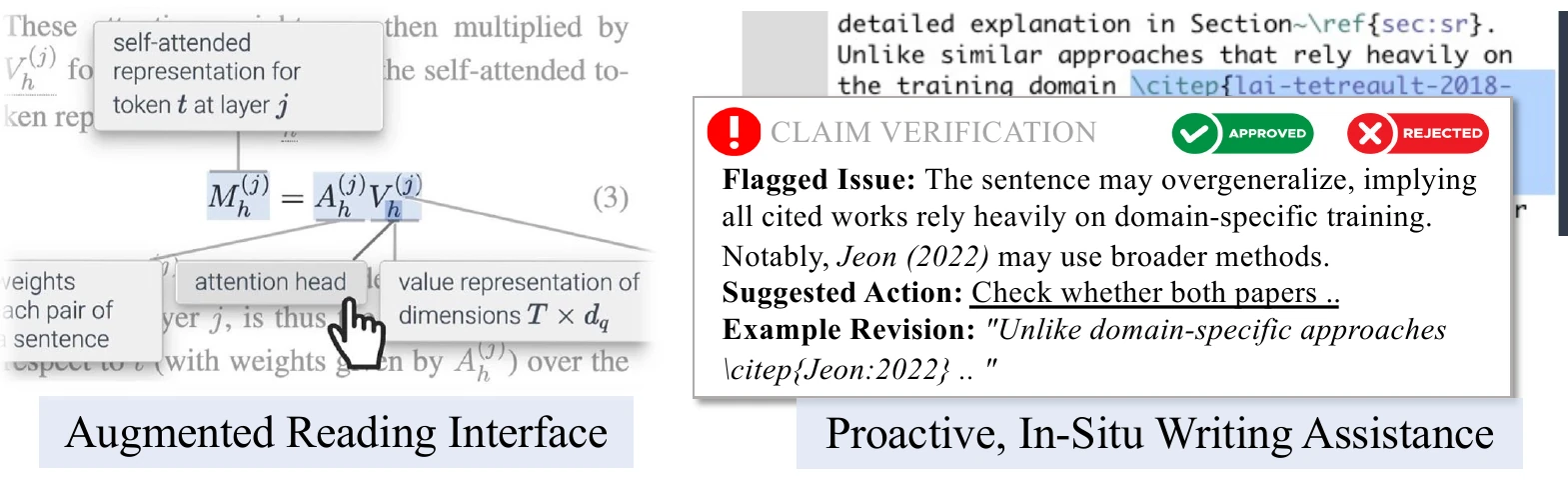
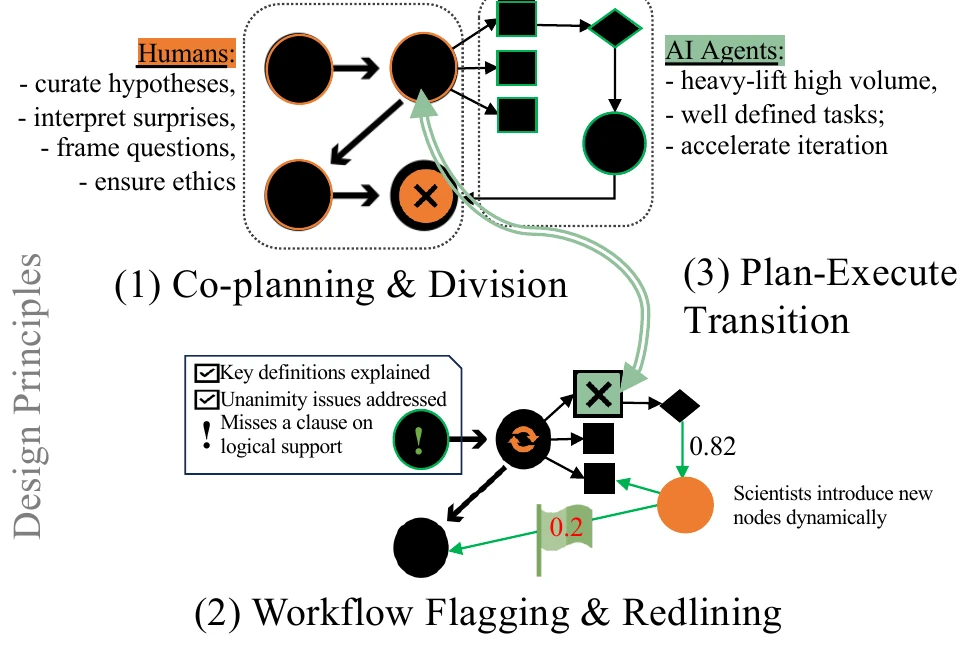
For writing, I envision scientists and AI agents co-developing research outputs. Our design principles:
- In-situ aids that catch overloaded symbols, redundant terms, and logical inconsistencies as you write.
- Workflow-aware interfaces: drafting a related-work section in Overleaf can trigger agents that retrieve cited papers, flag overstatements, and suggest better citations with rationales.
- Human-centric co-learning that supports, rather than replaces, scientists' thinking.
- Learning from workflow and interaction: systems that improve from revision data and user feedback .
Beyond reading and writing, SciTalk turns papers into short-form videos through a creator-style loop of drafting, critique, and revision; human evaluators still preferred creator-made videos, and model feedback diverged from human judgments most on subjective qualities like engagement . With visualization researchers, we build systems that generate visual insights and scaffold the design of multi-agent analysis workflows .
For lawyers
With UMN Law School and support from Open Philanthropy, we built LawFlow, capturing lawyers' and AI agents' full workflows—brainstorming, planning, research, client communication—on tasks such as forming a multi-state LLC for three co-founders . Human legal reasoning is recursive and exploratory; AI workflows are linear and exhaustive.
Advertising and journalism
Here nuanced affective responses, not just facts, drive outcomes. With Naver and the Hubbard School's MCAL, we model skepticism and nostalgia , study consumer engagement as search shifts to generative platforms , and build off-policy evaluation for ad auctions .
Whose thinking? Pluralistic alignment
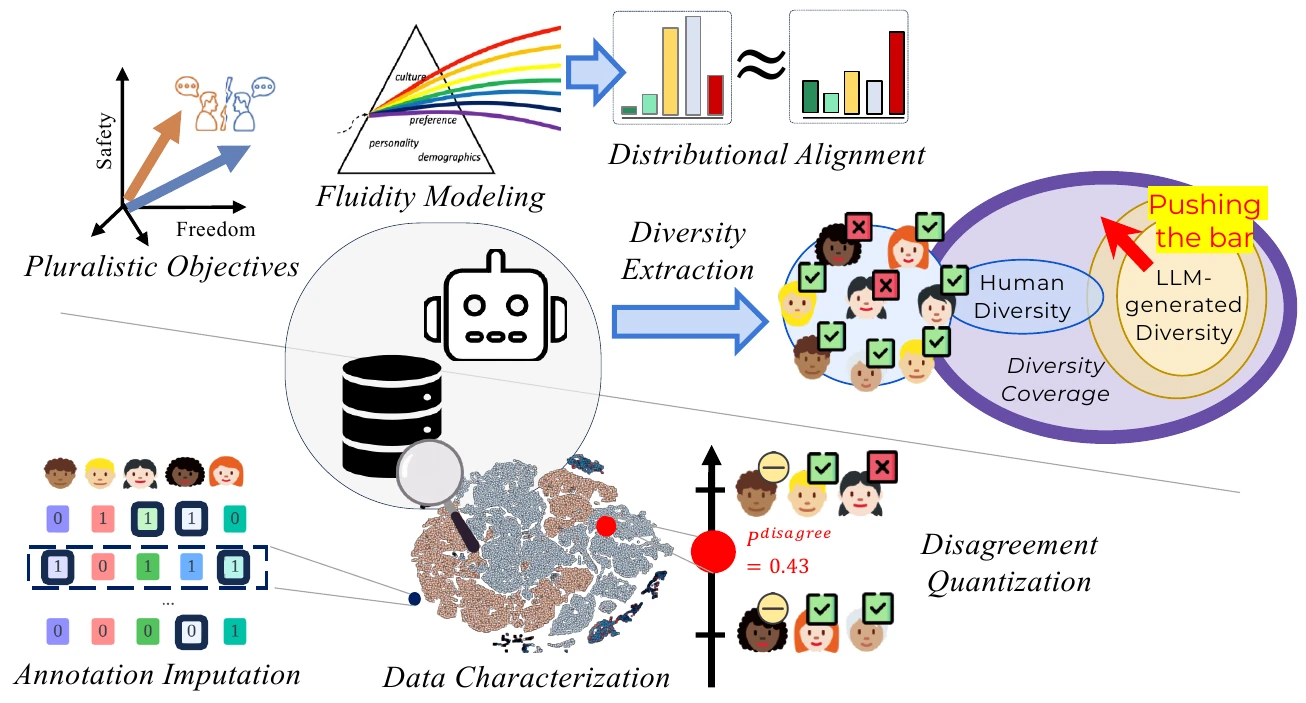
Rapid AI progress tends to collapse diverse perspectives into an "average." Because cognition itself is plural, alignment is not an add-on to cognitively aligned AI; it is a requirement.
Data-centric
We encode disagreement into datasets instead of averaging it away: imputing every annotator's missing labels so no view is dropped , characterizing data via learning dynamics , quantifying disagreement with demographics , and collecting perspectives from language learners .
Model-centric
At three granularities: individual preferences via pairwise preference learning , group distributions by extracting diverse opinions , and societal values by resolving value conflicts dynamically .
increases productivity and pushes one towards success and achieving their goals. Disagree:
can damage work-life balance, cause burnout and high levels of stress.
To build a community around these questions, I co-founded the Pluralistic Alignment workshop (NeurIPS 2024; second edition at ICML 2026).
What's next: forward-deployed AI for science
My lab now brings this whole program to scientists: collect their workflows in the field, learn where they get stuck, deploy agents into their work, and measure how much discovery actually speeds up.
- Scientific process data. Workflows from 50+ faculty across 15 UMN departments, from simulation tools to head-mounted lab cameras , showing where the cognitive gap lies for each kind of scientific task.
- Process learning for co-discovery. A Scientist Model that forecasts expert decisions, paired with self-evolving agents, so AI runs the small verification loops while human creativity goes to the big ideas .
- Open infrastructure. Agents, benchmarks, and learning methods released openly .
The goal over the next five years: AI-native, open scientific infrastructure that amplifies scientists' creativity—human-centric AI in which people, too, are augmented.
Community and support
This work draws on linguistics, cognitive science, and the social sciences, with collaborators in computer science, law, psychology, education, journalism, design, and medicine. These are the venues I have helped build to connect those communities:










References (…)
Hover or tap any citation in the text for the paper's figure, authors, and abstract. Every paper is on the Publications page.